A New Era of Eating: What You Need to Know About the 2025–2030 Dietary Guidelines
The U.S. government has just released the Dietary Guidelines for Americans, 2025–2030 — the federal blueprint for healthy eating that shapes everything from public school lunches to medical nutrition advice. This edition marks one of the most significant shifts in decades, with new priorities that reflect changes in food culture and political leadership, but not necessarily the science.
Here’s what’s new, what’s familiar, and what it means for how Americans eat.
🥦 1. Back to “Real Food” and Whole Ingredients
At the core of the new guidelines is a renewed emphasis on real, minimally processed foods — vegetables, fruits, whole grains, quality proteins, and dairy. Processed foods that are high in added sugars, salt, and artificial additives are now explicitly singled out as things to avoid or limit.
The government’s official press release states that Americans should prioritize nutrient‑dense foods and “dramatically reduce highly processed foods,” putting whole foods back at the center of everyday eating. (HHS)
Dr. Maria’s Take: Good advice
🍗 2. Higher Protein Targets
One of the most talked‑about changes is the recommendation for more protein — both plant‑ and animal‑based — particularly at every meal. Instead of a one‑size‑fits‑all range, the new guidance suggests aiming for about 1.2–1.6 grams of protein per kilogram of body weight. For a 150‑pound person, that equates to roughly 82–109 grams of protein per day. The previous requirements were 0.8g/kg for an adult, this increase is essentially double!
This shift moves beyond minimum requirements and reflects a growing focus on supporting muscle health, satiety, and metabolic function.
Dr. Maria’s Take: For individuals trying to lose weight, gain muscle, or taking GLP-1s like Ozempic or Wegovy this is good advice. For most adults, it is most likely too much and good lead to adverse events like kidney stones or kidney disease.
🍰 3. Cutting Added Sugars Sharply
The updated guidelines take a much tougher stance on added sugars. For the first time, they propose that no amount of added sugar should be considered part of a healthy diet. On a practical level, they recommend no more than 10 grams (about 2 teaspoons) of added sugar per meal.
That’s a meaningful departure from past guidance, which focused on keeping added sugars below a percentage of total daily calories.
Dr. Maria’s Take: This is good advice but completely removing added sugars is most likely not feasible, sticking to the less than 10 grams per meal is more realistic.
🥛 4. Dairy and Fats: Full‑Fat Dairy, Healthy Fats From Foods
In a notable change from past editions:
Full‑fat dairy is now included as part of healthy eating — provided it contains no added sugars.
Healthy fats from whole foods — like nuts, seeds, olives, avocados, and natural animal fats — are embraced as part of balanced meals.
While the guidelines still suggest limiting saturated fat to about 10% of daily calories, the focus is on where those fats come from.
Dr. Maria’s Take: While we have previously recommended low-fat dairy to lower the risk of heart disease, recent studies have found that full-fat dairy does not have the negative impacts on heart disease as we previously thought. In fact, dairy has found to be anti-inflammatory and full-fat dairy may have more potent anti-inflammatory effects than low-fat dairy. One problem with this advice is that it doesn’t into account alternatives for individuals with lactose-intolerance or dairy allergies.
Overall, the healthy fats from whole foods is good advice, with the exception of recommending fats from natural animal products like red meat. There is substantial evidence that a diet high in fatty red meats increases not only the risk of heart disease but also certain forms of cancer.
🍺 5. Alcohol Guidance Has Changed
Another departure from previous recommendations is the handling of alcohol. The old guidelines specified clear limits — such as ≤1 drink per day for women and ≤2 for men. The new edition removes those specific limits and instead advises Americans to “consume less” alcohol for better health, though certain groups (like pregnant people) are still urged to avoid alcohol altogether.
Dr. Maria’s Take: This new guidance is potentially dangerous. Removing specific limits could allow individuals to feel like they are OK to drink in excess. We do know that excessive alcohol intake can increase the risk of heart disease, various forms of cancer and have a negative impact on liver, brain and gut health. Best to stick with the previous guidelines: ≤1 drink per day for women and ≤2 for men.
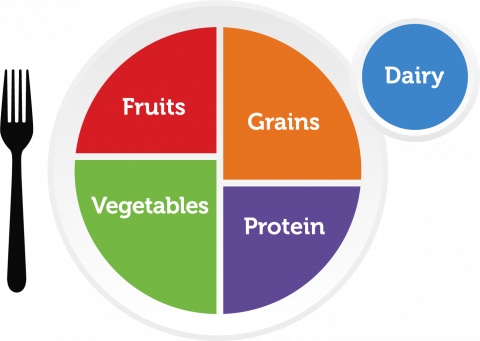
Previous Guidelines: MyPlate
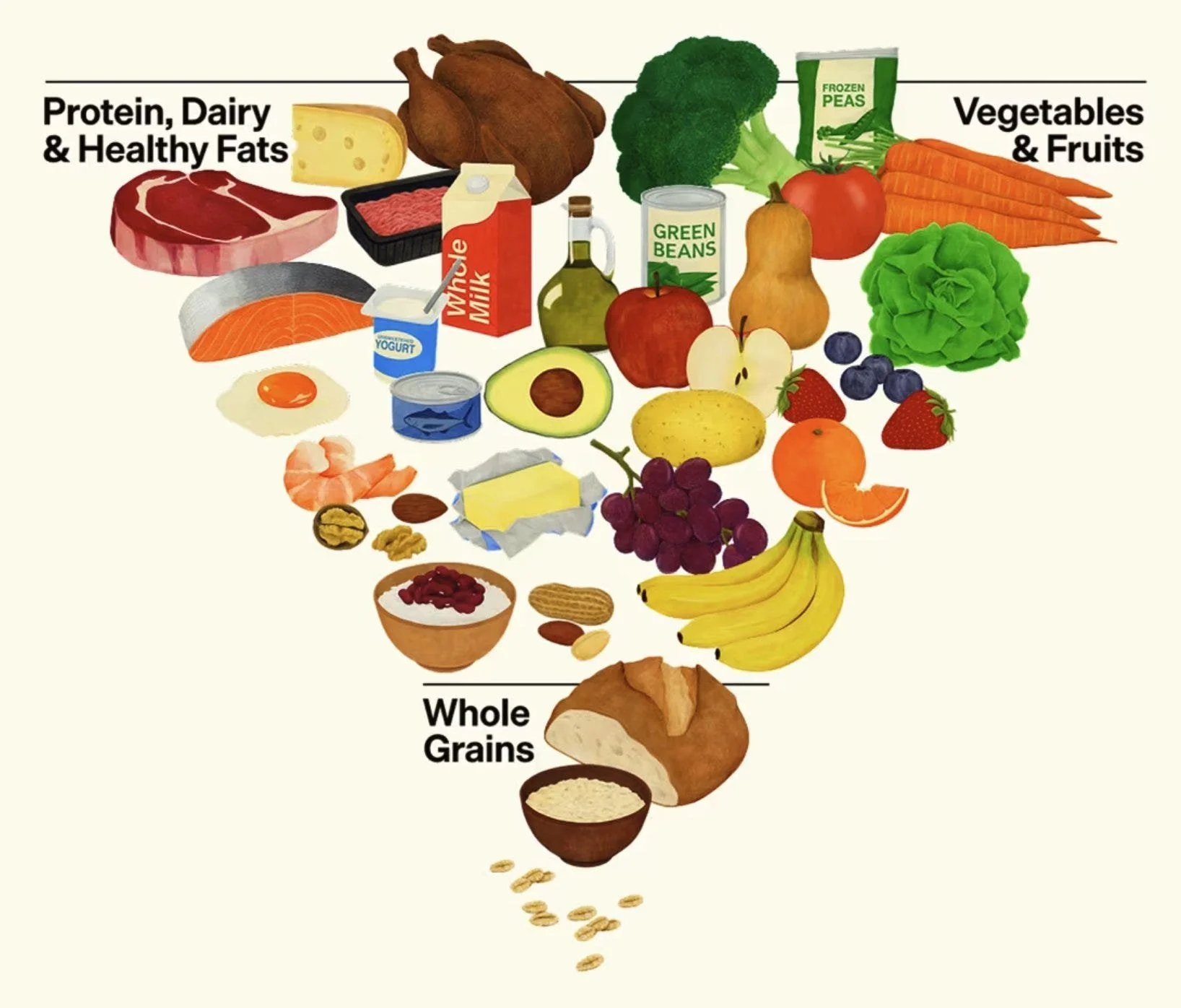
New Guidelines: Real Food Pyramid
🍽 6. Designed to Be Simpler and More Accessible
The new guidelines are reportedly more concise — just 10 pages — and include a revamped visual guide to healthy eating. That graphic, a variation on the classic food pyramid, places nutrient‑dense foods at the base to show priorities at a glance.
This pared‑down approach is meant to help consumers apply the recommendations in real life, rather than wading through years of dense nutritional jargon.
Dr. Maria’s Take: The new pyramid is CONFUSING! Red meat, cheese and whole chicken is at the top… legumes, which we know have substantial health benefits, are small and towards the bottom. To put this in perspective, our previous guidelines included MyPlate, a simple graphic showing you how to design your plate for most meals. The new pyramid doesn’t really show people how to build their meals and I think will lead to a lot of confusion. Personally, I will continue to use MyPlate to educate my patients.
What Does This Mean for You?
Whether you’re a busy parent, a fitness enthusiast, or someone trying to eat healthier, here are the takeaways:
Cook with more whole foods — think fresh produce, quality proteins, and whole grains.
Skip added sugars where you can — especially in snacks, desserts, and sweetened beverages.
Consider your protein needs — especially if you’re active, aging, or managing weight.
Include healthy fats — from natural sources, like avocados, nuts and seeds.
Be mindful with alcohol — the guidance is looser, but health experts still encourage moderation.
Why This Matters
The Dietary Guidelines influence:
National school lunch programs
SNAP (food assistance) policies
Medical and dietitian recommendations
Food industry reformulations
As with all public health guidance, individual needs vary. If you have specific health conditions or dietary needs, consider working with a registered dietitian to tailor these recommendations to your life.