Low-Carb, Keto, Paleo: Which Diet (If Any) Is Right for You?
The world of nutrition can feel like a maze — especially when every new headline claims a different diet is the best diet for weight loss. Three of the most talked-about eating approaches today are the low-carb diet, the keto diet, and the paleo diet. But what’s the difference? How do you know which one fits your lifestyle? And is one truly better than the others?
Let’s break down the paleo vs keto vs low-carb differences, their benefits, and potential drawbacks so you can decide which (if any) is right for you.
1. The Low-Carb Diet
A low-carb diet is any eating plan that reduces carbohydrate intake compared to standard recommendations, focusing more on protein, healthy fats, and non-starchy vegetables.
Key points:
Carbs: Typically 50–150g per day (though ranges vary)
Foods: Meat, fish, eggs, nuts, seeds, healthy oils, leafy greens, fruits
Popular for: Weight management, improved blood sugar control
Low-carb health benefits may include:
Better blood sugar regulation
Reduced cravings
Sustainable weight loss for many people
Potential drawbacks:
May be harder for athletes with high energy demands
Some people experience fatigue during adjustment
Who it’s for:
The low-carb lifestyle can be flexible and easier to maintain than stricter diets. It’s a good option for those easing into carb reduction.
2. The Keto Diet
The keto diet takes low-carb eating to the extreme. It’s designed to shift your body into ketosis, where fat becomes your primary fuel source.
Keto macros typically look like:
Carbs: ~5–10% of total calories (usually under 50g/day)
Fat: ~70–80% of total calories
Protein: ~15–20% of total calories
Benefits:
Rapid initial weight loss
Potential improvement in blood sugar and insulin sensitivity
Appetite suppression
Drawbacks:
Keto flu symptoms (fatigue, headache, nausea) during the first week or two
Limited food variety
Risk of nutrient gaps without careful planning
Not sustainable long-term
Best for:
Those who thrive on structure and want rapid fat loss or improved metabolic markers. If you’re wondering is keto right for me, consider the risk for weight regain when you stop the diet — and check with your healthcare provider first.
3. The Paleo Diet
The paleo diet focuses on eating like our ancestors — whole, unprocessed foods, and avoiding grains, legumes, dairy, and refined sugar.
Typical foods:
Meat, seafood, eggs, vegetables, fruits, nuts, seeds, and healthy fats.
Carbs:
How many carbs in paleo diet? It varies — paleo isn’t inherently low-carb. Your intake depends on fruit, starchy veggie, and tuber consumption.
Pros:
Emphasis on nutrient-dense, whole foods
May reduce processed food cravings
Supports stable blood sugar
Cons:
Restrictive for some
Eliminates entire food groups, which can lead to nutrient deficiency
Can be expensive to follow
Who it’s for:
If you’re wondering is paleo right for me, there are better ways to lose weight and eat healthy without breaking the bank or removing entire food groups
4. Low-Carb vs Keto vs Paleo for Weight Loss
Here’s a quick comparison:
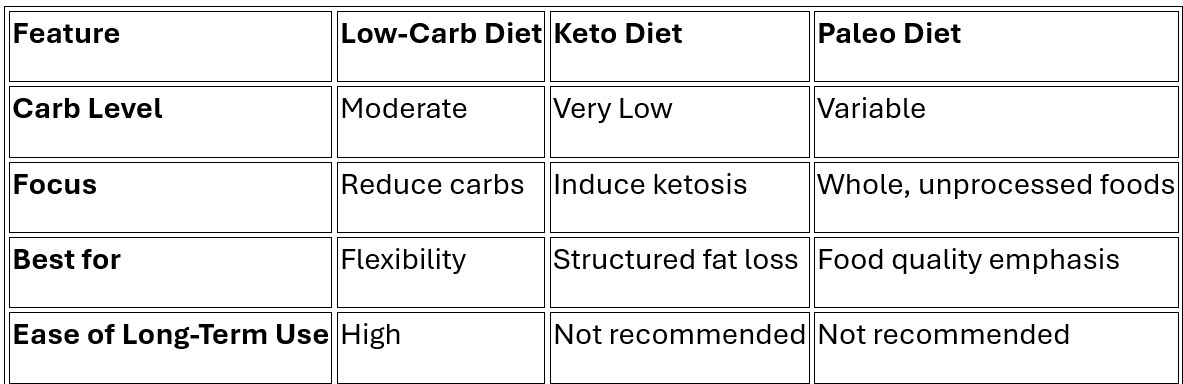
When it comes to low-carb vs keto for weight loss, keto may lead to faster short-term results, but low-carb is often easier to maintain. Keto vs paleo differs mainly in carb restriction intensity and food rules.
5. Common Questions & Myths
Can you do keto and paleo together? Yes — often called “Paleo Keto,” but it’s even more restrictive.
How many carbs in keto diet? Usually under 50g/day.
Low-carb diet myths: Not all carbs are bad — quality matters.
Paleo diet myths: It’s not only about eating meat — vegetables and healthy fats are key.
6. How to Choose the Right Diet Plan
Consider:
Your health goals
Your willingness to track macros or avoid certain foods
Your lifestyle and cooking habits
If you’re new, start with low-carb diet for beginners, then experiment.
Bottom Line:
There’s no one-size-fits-all best diet for weight loss. The right choice is the one you can stick with, that meets your nutritional needs, and supports your health long-term.